
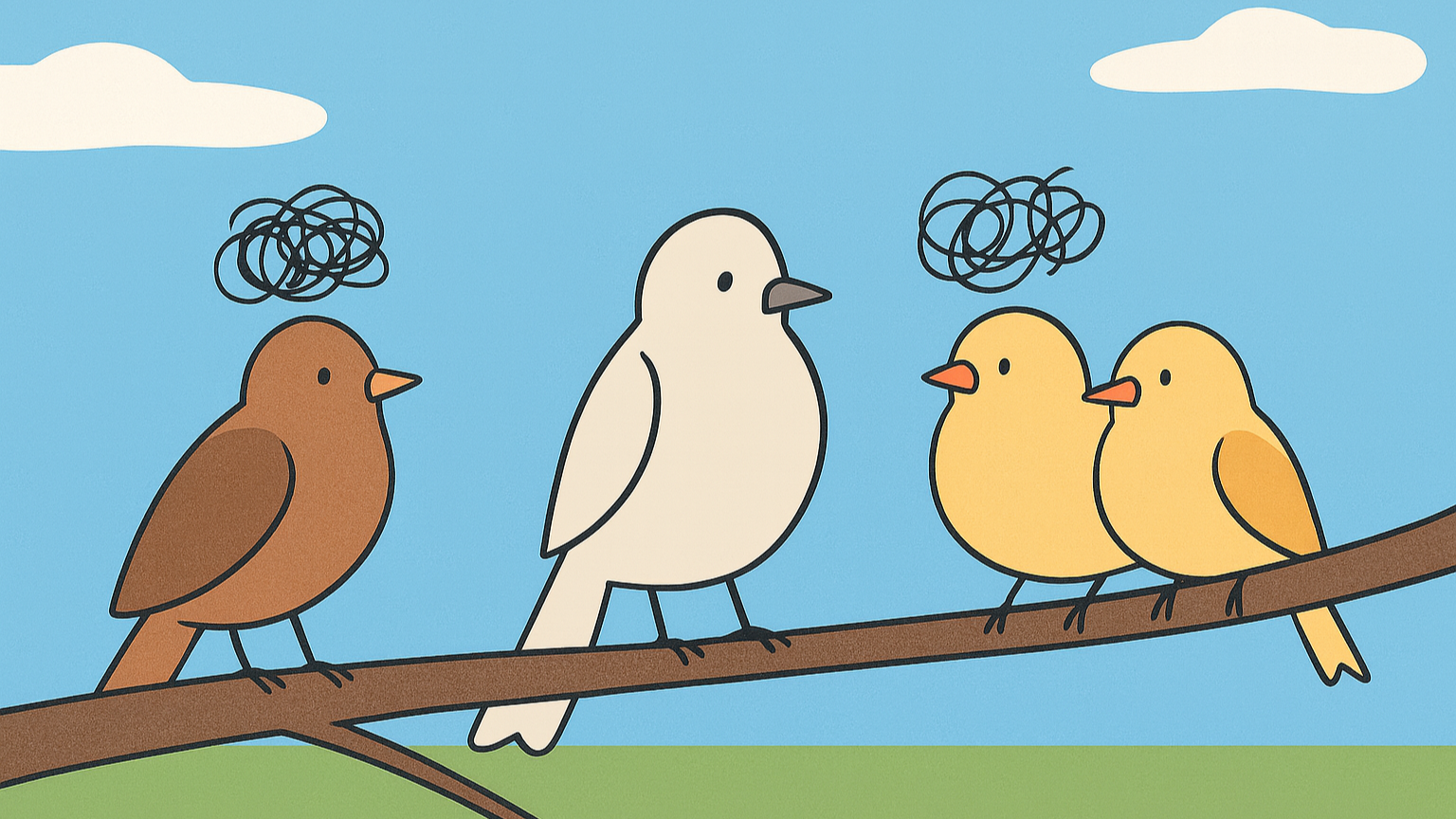
How early attachment patterns shape the way we connect (and disconnect) with others — and what it might look like to feel safer in relationships.
”Why Is This So Hard?”
When it comes to relationships, many of us may find ourselves asking:
“Why do I pull away or sabotage things when they get close?”
Or…
“Why do I care so much about their tone?”
Or…
“Why do I always expect to be left — even when things seem okay?”
Relationships — whether romantic, platonic, or somewhere in between — can stir up some of our most vulnerable feelings. When relationships feel harder than they “should,” it’s easy to blame ourselves, to look inward and ask “What’s wrong with me?”
But the truth is: You’re not broken. You’re human — responding to patterns you may have learned a long time ago.
Attachment theory gives us a gentle lens through which to view those patterns.
Not as fixed labels or diagnoses, but as a set of early emotional patterns that shape how we connect, trust, and protect ourselves in close relationships.
We didn’t choose these maps consciously.
But we can work with them consciously – here and now.
Because once you understand how you learned to relate, you can begin to soften the grip of those old rules — and move toward connection that feels safer, truer, and more free.
What Is Attachment (and How Does It Form?)
Attachment is our emotional wiring for connection.
It shapes how safe we feel to get close to others, to depend on them, and to be fully ourselves — especially in moments of vulnerability.
This wiring starts to take shape early in life, through our caregiving relationships.
- Maybe you learned that comfort was available — but only sometimes.
- Maybe you learned that expressing emotion led to conflict, or silence.
- Maybe you learned that you had to stay strong, quiet, or useful to stay close.
These early experiences become the blueprint — or “relational template” — for how we navigate closeness later in life.
They quietly shape questions like:
- Can I trust people to be there for me?
- Will I be rejected if I show too much?
- Is it safer to rely only on myself?
It’s important to say: this isn’t about blame.
Even well-meaning caregivers can unintentionally reinforce anxious, avoidant, or mixed messages — especially if they were stressed, unavailable, inconsistent, or overwhelmed themselves.
Again, it’s not about blame – it’s about understanding what we learned to expect from others, and the strategies we developed in response.
The key thing to remember is this:
Attachment patterns aren’t destiny.
They’re starting points — a set of emotional expectations that helped us survive and connect at the time.
But maybe, just maybe, they no longer serve us in the same way.
And once we can see them clearly, we can begin to choose how we respond in the here and now — and begin to build relationships that feel safer, freer, and more connected.
So what do these blueprints often look like in practice?
The Spectrum of Attachment Styles
Attachment styles aren’t personality types — and they’re certainly not diagnoses.
They’re better understood as relational adaptations: patterns we developed in response to our early environment, in an effort to get our needs met and stay emotionally safe.
And while they tend to fall into four broad categories, they exist on a spectrum.
Most people don’t fit neatly into just one — you might notice different tendencies in different relationships, or find that your style shifts under stress or in times of emotional vulnerability.
Here’s how each style tends to form — and how it might show up in everyday life.
Secure Attachment:
“People are there for me — and I’m okay on my own, too.”
This tends to develop when caregivers are consistently available, emotionally attuned, and responsive.
Children learn that it’s safe to express their needs, and that closeness doesn’t come at the expense of independence.
As adults, people with secure attachment generally feel comfortable with both intimacy and autonomy.
They can ask for support, offer it to others, and bounce back more easily from conflict or disconnection.
They tend to communicate clearly, hold healthy boundaries, and manage space or silence without spiralling into fear or withdrawal.
Anxious (Preoccupied) Attachment:
“I need closeness to feel safe… but I’m scared you’ll leave.”
This style often develops in environments where connection felt inconsistent — sometimes caregivers were warm and attentive, other times distant, distracted, or unpredictable.
The result? A heightened sensitivity to signs of rejection or emotional distance.
Adults with anxious attachment may find themselves overthinking interactions, craving reassurance, or feeling “too much” for wanting closeness.
That might look like obsessively checking messages, overanalysing someone’s tone, or interpreting a delayed reply as abandonment.
They may find it difficult to self-soothe, and might struggle to believe they’re truly loved or wanted unless they’re receiving constant proof.
Avoidant (Dismissive) Attachment:
“It’s safer not to rely on anyone.”
Avoidant patterns can emerge when caregivers were emotionally unavailable, dismissive, or uncomfortable with vulnerability.
The child learns to minimise their needs, stay self-sufficient, and avoid relying on others to avoid disappointment or shame.
As adults, people with avoidant attachment may downplay emotions, feel uncomfortable with dependence, or withdraw when things get too close — not because they don’t care, but because closeness can feel overwhelming or unsafe.
This can show up as feeling suffocated in relationships, avoiding difficult conversations, or needing a lot of space — not just physically, but emotionally.
Sometimes, they shut down when overwhelmed or dismiss their own feelings entirely.
Fearful-Avoidant (Disorganised) Attachment:
“I want closeness… but I don’t trust it.”
This style often forms in environments that were frightening, traumatic, or chaotic — where the same person might have been a source of comfort and fear.
There’s a deep conflict between the need for connection and the instinct for self-protection.
Adults with fearful-avoidant attachment may experience a push-pull dynamic in relationships: craving intimacy but fearing it at the same time, or swinging between clinging and withdrawing.
They might sabotage closeness before it can fail them, lash out under stress, or feel overwhelmed by both being alone and being with someone.
The emotional world can feel confusing — always wanting connection, but always expecting it to hurt.
This Isn’t a Life Sentence
These styles aren’t fixed — and they’re not life sentences.
They don’t define you, limit you, or dictate what kind of relationships you’re allowed to have.
But they can help explain why certain patterns keep repeating — and offer a map toward greater understanding, healing, and change.
Things like shutting down during conflict, struggling to say what you need, or overreacting to silence — these aren’t just quirks, and they’re not personality flaws. They’re survival strategies.
You adapted to your early environment the best way you could. You protected yourself, stayed connected, or avoided pain — often without even realising it. These deeply wired emotional responses made sense once, even if they cause pain now.
Because environments change.
And here’s the good bit – patterns can change, too.
Building Security (In Yourself and Others)
You don’t need a perfect childhood — or a perfect partner — to start building secure attachment.
Security isn’t a personality trait.
It’s a practice.
And it’s something you can grow into, step by step, from wherever you’re starting.
That might mean learning to:
- Name and soothe your own triggers
- Communicate your needs with more clarity and less panic
- Set boundaries without guilt or apology
- Let people care for you (yes, even when it feels uncomfortable)
- Stay present when closeness feels scary — instead of shutting down or pulling away
Sometimes, healing looks like doing the opposite of what your attachment style wants to do.
Like sitting with the discomfort of not texting again.
Like staying in the conversation when you’d normally shut down.
Like letting someone close… just a little closer than you usually would.
It’s not easy — but it’s not all-or-nothing either.
Even if your default reactions still show up (like pulling away, clinging harder, or going quiet), your relationship to those reactions can shift.
This is where insight becomes power.
The more you can slow the moment down — name what’s happening, recognise the urge — the more space you create to choose something different.
You won’t always catch it.
You won’t always get it “right.”
But with time, even just noticing the pattern is progress.
That’s where healing begins:
Not in becoming perfect — but in becoming aware.
You don’t have to erase your attachment style.
But the more you understand it, the less it runs the show — and the more room you create to connect in a way that feels true, not just safe.
And that’s how new blueprints begin to take shape — one choice at a time.