
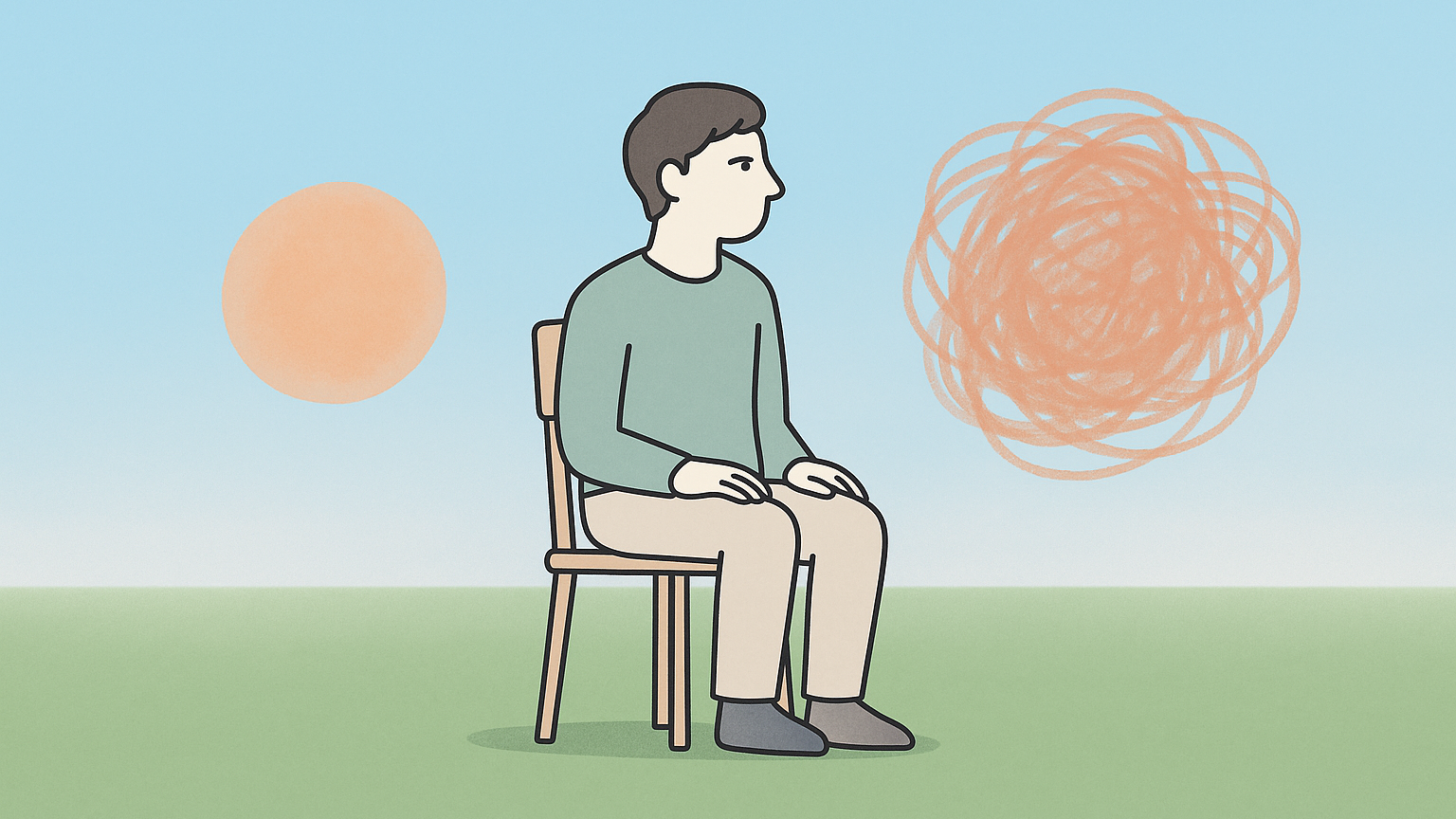
Why feeling what we feel — instead of fighting it — can be unexpectedly freeing…
A Different Way Through
“I just want this feeling to go away.”
That’s usually the first thought, isn’t it? When something hurts — anxiety, sadness, shame, overwhelm — our natural instinct is to fix it. We look for the exit, the off-switch, the thing that will make it stop.
And in many areas of life, that instinct works beautifully. We know how to troubleshoot, optimise, and problem-solve. Modern life is full of tools and hacks and treatments and self-improvement strategies. So it makes sense that when pain shows up, we treat it like another problem to solve.
But emotional pain doesn’t follow the same rules. Often, the more we try to suppress it, overthink it, or push it away… the more it tightens its grip.
There’s a quiet wisdom in mindfulness — and in Buddhist teachings — that invites a different approach. One that feels almost backwards at first:
We can’t always stop the pain — but we can change our relationship to it.
It’s a bit like trying to untangle a knot by yanking at it — the more force you use, the tighter everything pulls. The way through isn’t more effort — it’s softening. Slowing down. Giving it space to loosen on its own.
This shift can feel uncomfortable. Even a little wrong. But it opens up a kind of space — one where we’re not fighting ourselves so hard.
And in that space, something surprising can happen:
The pain is still there — but the suffering begins to ease.
Pain vs. Suffering: What’s the Difference?
It can be helpful — and strangely relieving — to separate pain from suffering.
Pain is the raw stuff of life. The heartbreak after loss. The anxiety before a big change. The grief, the anger, the disappointment. Pain is what shows up when we’re human and things are hard.
Suffering, on the other hand, is what we layer on top. It’s the commentary, the judgment, the urgency to fix or escape. It’s the inner voice that says:
“I shouldn’t feel this.”
“This means I’m weak.”
“I can’t cope — I need to make this stop.”
So the original pain — say, a wave of anxiety — gets buried under a pile-on of fear, shame, and self-criticism.
In mindfulness and ACT (Acceptance and Commitment Therapy), they sometimes talk about this as clean vs. dirty discomfort.
- Clean pain is the original feeling.
- Dirty pain is everything we pile on top.
A common example…
“I feel anxious.” ← that’s pain.
“This means I’m failing / I should pull myself together / What’s wrong with me?” ← that’s suffering.
The suffering isn’t our fault — it’s a very normal response, especially in a culture that teaches us to avoid discomfort. But the more we layer it on, the harder everything feels.
There’s a well-known teaching from Buddhism that puts it simply:
“Pain is inevitable. Suffering is optional.”
That might sound a bit too neat at first — especially if you’re in the middle of something painful. But what it points to is this: even if we can’t eliminate the pain, we may not need to add more suffering on top.
And that alone can change everything.
How Resistance Amplifies Pain
Most of us don’t mean to make things harder for ourselves. But when discomfort shows up, we often react in ways that — without realising — turn pain into suffering.
We try to get rid of the feeling. Out-think it. Distract from it. Judge ourselves for having it in the first place. And slowly, quietly, the original pain becomes harder to bear.
Here are some common flavors of suffering you may recognise:
Overanalysing the feeling
Sam feels anxious before a meeting. A normal enough response — a bit of tension, some butterflies. But instead of noticing the nerves and letting them pass, they start analysing:
“Why am I like this?”
“This shouldn’t be happening again.”
“I should be over this by now.”
“What if I mess up?”Now it’s not just anxiety. It’s shame, pressure, and self-blame — all stacked on top. The original discomfort gets buried under a landslide of mental noise.
Or how about this one…
Tensing or bracing
Sometimes resistance isn’t mental — it’s physical. We hold our breath. We clench our jaw. We brace against the feeling, like we’re waiting for a wave to crash.
But the tension doesn’t protect us. It often makes the experience more intense — and more exhausting. The body becomes a battleground.
Or this one…
Judging ourselves for struggling
Ravi notices he’s low and flat for the third day in a row. Instead of offering himself patience, the thoughts rush in:
“Snap out of it.”
“Stop wallowing.”
“You’re being ridiculous.”Now he’s not just feeling low — he’s also feeling inadequate and ashamed. The pain doubles, even though the original emotion hasn’t changed.
Or even this one…
Avoiding or numbing
Riya feels overwhelmed. Her chest is tight and she can’t settle. Instead of pausing, she reaches for her phone and scrolls for hours. She doesn’t even notice the time passing — but when she looks up, nothing’s better.
In fact, now the anxiety is still there… and it’s joined by guilt, disconnection, and a pounding headache.
These examples all represent the second arrows, a concept from Buddhist teaching:
- The first arrow is the pain we can’t avoid.
- The second arrow is how we respond — often with resistance, fear, or self-judgment.
We don’t always realise we’re adding a second arrow. But once we notice, we have a choice. We may not be able to stop the first — but we can start unlearning the second.
What Mindfulness Offers Instead
If resisting pain creates more suffering… what’s the alternative?
Mindfulness offers a quieter, more spacious way through. It doesn’t promise instant relief or emotional perfection. But it does offer a different relationship to what we’re feeling — one that’s less reactive, less tangled, and more compassionate.
Instead of scrambling to fix the feeling, mindfulness invites us to meet it.
That means:
- Awareness – gently noticing what’s present in your body, mind, or heart
- Allowing – letting it be there, just for now, without trying to push it away
- Compassion – offering yourself the same kindness you’d show a struggling friend
This can feel strange at first. Like doing the emotional opposite of everything we’ve been taught.
It might feel like “giving in” to the feeling… or like you’re just sitting in the discomfort for no reason. And honestly? It is uncomfortable at first. Sitting with pain without rushing to change it can feel counterintuitive — even a bit vulnerable.
But over time, it starts to loosen the grip.
It’s like stepping out of an internal tug-of-war. The pain might still be there, but you’re no longer pulling against it. And that shift — from fighting the feeling to holding it more gently — can reduce suffering in quiet but powerful ways.
A good way to sum this up might be:
It’s less about feeling better right away… and more about struggling less over time.
A Small Practice, A Quiet Shift
Sometimes the smallest shift — just a few seconds of staying with yourself instead of pushing away the feeling — can be enough.
When discomfort shows up, try this…
“Right now, I feel a tightness in my chest.”
“I notice the thought, ‘I can’t handle this.’”
“I’m just going to breathe with this for a moment — not fix it, not fight it.”
That’s it.
You’re not trying to make the feeling go away. You’re just making space for it — long enough to stop running.
If that feels hard (and often it does), you could try placing a hand on your heart, or taking one slow, deliberate breath, and saying to yourself:
“This is hard… and I’m staying with it just for a few seconds.”
That might be enough for today.
You don’t need to love your pain.
You don’t have to make it mean something.
But softening around it — instead of bracing against it — can offer a quiet kind of relief.
Consider this:
Peace isn’t the absence of pain — but the absence of war with it.
So next time something uncomfortable arises, maybe you don’t need to fix it right away.
Maybe you could just pause.
Notice the second arrow before it lands.
And ask gently:
“What if I didn’t have to fight this — just for now?”