Author: Christopher Macdonald

  • Conditions of Worth (Our Invisible Rulebooks)

    Conditions of Worth (Our Invisible Rulebooks)

    The invisible “rules” we learn about what makes us lovable or acceptable — and how they still shape us as adults.

    You Were Never Meant to Earn Your Worth

    At some point, many of us quietly absorb a message: that we’re only okay — only lovable, acceptable, or safe — if we’re a certain way.

    These invisible rules may tell us that we need to be, for example:

    • Kind.
    • Helpful.
    • Productive.
    • Successful.
    • Calm.
    • Easy to be around.

    We might not remember when we learned this and the likelihood is that no one sat us down and explained it in such outright terms. But over time, the message sinks in:

    You’re only worthy if…

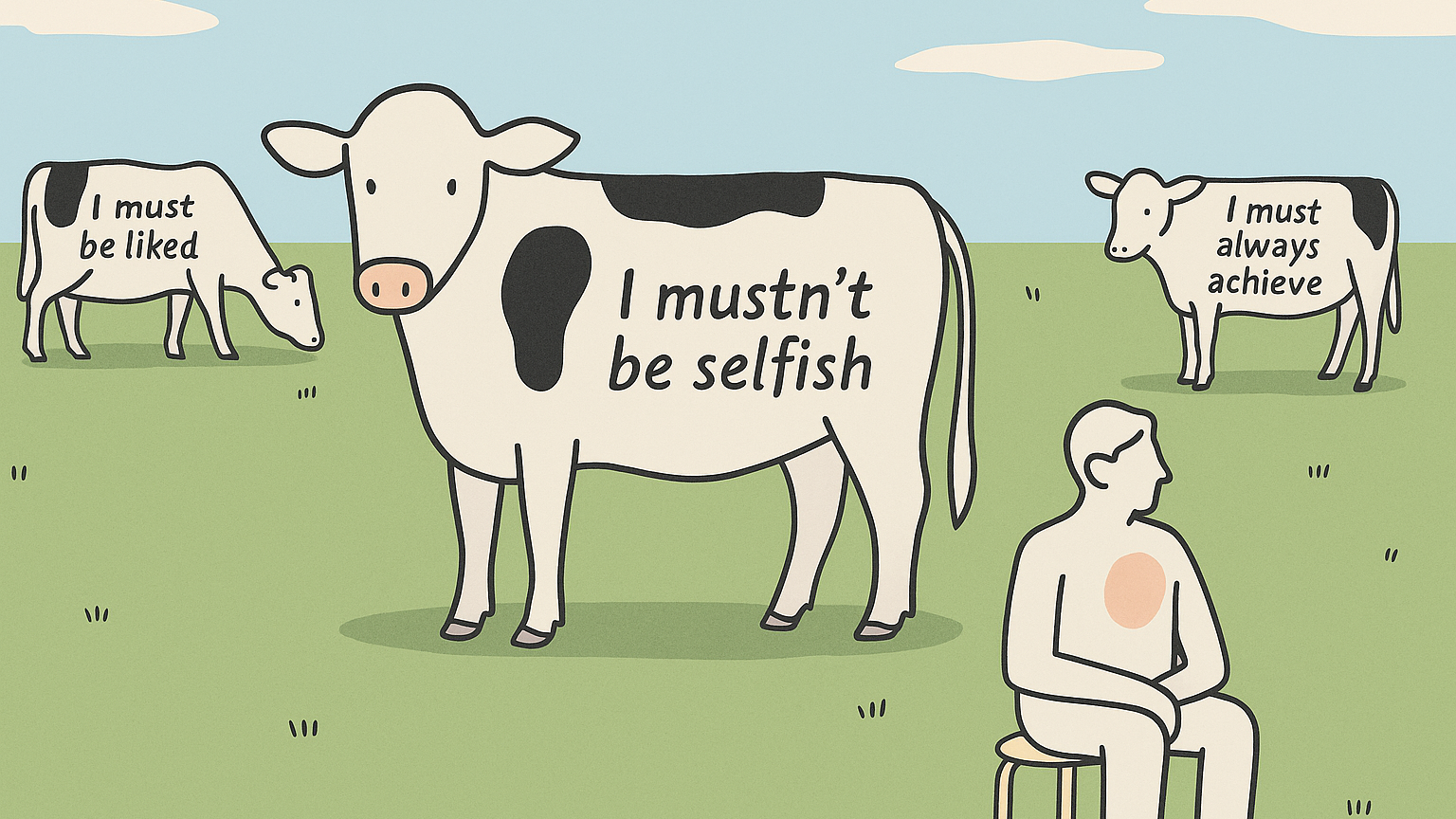
    In therapy, we often call these kinds of messages Conditions of Worth — or, COWs for short (to keep it light, and to give us something memorable to spot and challenge!).

    These aren’t beliefs we consciously chose. They usually started as our best attempt at staying connected, accepted, or emotionally safe — especially if we grew up in families or systems where love or approval felt conditional. So we learned to shape ourselves accordingly. To overfunction. To suppress the parts of us that didn’t “fit.”

    Take this small example…

    Someone grows up in a family where she is always praised for being “the sensible one” — calm, self-contained, never making a fuss. Over time, they might begin to believe that showing emotion is risky. That if they cry, get angry, or say how they really feel, they’ll upset people — or worse, be seen as “too much.” So they push feelings down. And they keep pushing, even when no one’s asking them to anymore.

    We all carry some version of similarly quiet, internal “rules” that once kept us safe but now keep us stuck.

    What we’re about to do is explore where these invisible rules come from, how they still shape us, and what it might feel like to start letting go of them — to live with fewer conditions… and more space to just be yourself, fully.

    Where Do These “Rules” Come From?

    No one hands us a rulebook.
    But we start writing one, early on.

    Sometimes it’s obvious:

    “Be good.” “Say thank you.” “Don’t talk back.”

    Other times, it’s subtle — a look, a reaction, a shift in the mood.

    And slowly, we start to internalise quiet rules like:

    • Be helpful → don’t have needs
    • Be smart → don’t fail
    • Be easygoing → don’t be too much

    These kinds of beliefs often take root in childhood. They’re shaped by all sorts of things:

    • What our families praised or punished
    • Messages from school, religion, or culture
    • What got us attention from friends — or what got us teased
    • The roles we slipped into without meaning to
    • The things we felt we had to hide, to stay safe or keep the peace

    This isn’t about blame.
    Most of the time, people were just doing the best they could. But kids are sponges.
    We absorb what gets us connection — and we avoid what doesn’t.

    Underneath it all, it’s not just about approval.
    It’s about safety. And belonging.

    Here’s how those old rules might still be showing up:

    • A child praised for being “low-maintenance” might learn to suppress their needs.
    • A teen called “too sensitive” might start hiding their emotions.
    • A kid who only got attention when achieving might link their worth with performance.

    To aid your own reflections, a helpful prompt might be:

    What did I learn I had to be — or not be — in order to feel accepted or valued?

    And, of course, when we grow up, these beliefs don’t just disappear. Often, they just go underground — shaping the way we talk to ourselves, the choices we make, and how we show up in the world.
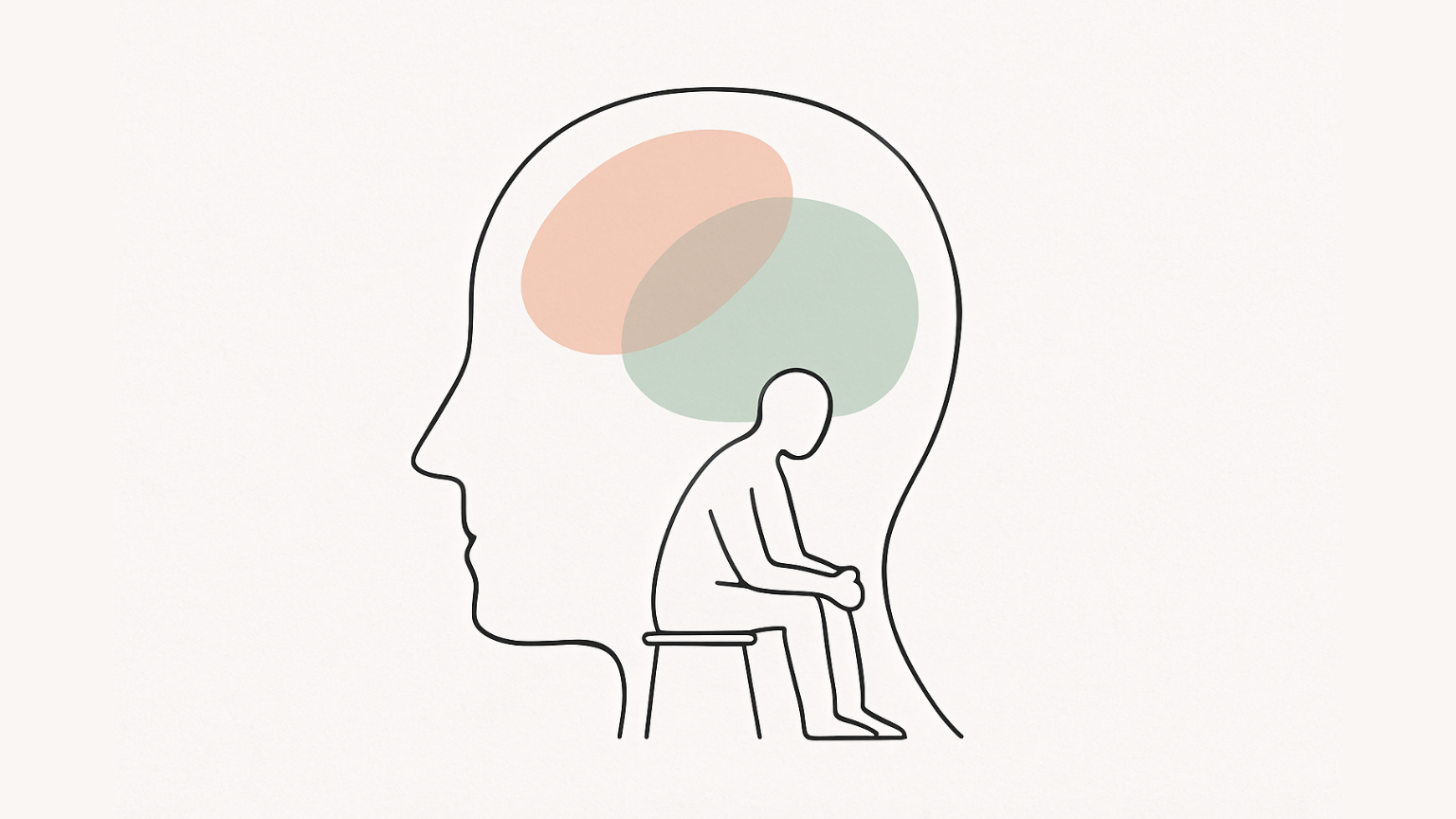
    You can think of them as the base of the iceberg — mostly hidden, but integral to what is above the surface.

    How They Show Up Now

    When we grow up, we don’t just leave these beliefs behind with our childhood bedrooms.
    The people or places that shaped them may no longer be present, but the internal “rules” often stick around.

    They show up in our inner voice.
    In the way we respond to others — especially when we’re stressed, tired, or feeling vulnerable.
    And in the habits that feel automatic… but not always helpful.

    A quick example…

    Imagine someone who always prides themselves on being the “go-to” friend — reliable, thoughtful, always available.
    Over time, this person starts to feel burnt out. Even resentful. Any time they think about setting a boundary or saying no, a familiar voice kicks in:

    “Don’t be selfish. They’ll think you don’t care.”

    And, logical or not, this feels real… Very real.

    These kinds of internal rules can show up in all sorts of ways, like:

    • Struggling to rest or slow down without guilt
    • Feeling responsible for everyone else’s emotions
    • Over-apologising or overexplaining
    • Equating your worth with how productive, useful, or successful you are
    • Avoiding conflict — especially if anger feels dangerous
    • Feeling anxious or ashamed when you’re not being helpful or liked
    • An inner critic that turns up the volume anytime you fall short

    You might not walk around thinking,“I must achieve to be lovable”, but the feeling creeps in anyway when you slow down, make a mistake, or try to do less.

    This isn’t about weakness.
    It’s about wiring.

    These beliefs often operate just below awareness — not always loud, but quietly steering how we live.
    Your brain isn’t being difficult — it’s doing what it learned would keep you safe. It’s not necessarily serving you well anymore — but, in a world where survival is our brain’s primary concern, it does make perfect sense.
    At times, it can feel like your mind is still following an old rulebook — one that helped you survive the early chapters, but doesn’t match the story you’re trying to live now.

    Try asking yourself:

    “What’s something you often feel like you ‘should’ be doing — even when no one’s actually asking you to?”

    Uncovering the old rules that still silently guide us is a key step towards understanding “How your past is still present”, and how you might begin loosening the things that still keep you tethered…

    You Can’t Heal What You Can’t See

    Remember the ‘Iceberg’ metaphor? With our core beliefs sitting at the base – not always visible but always very much there, quietly shaping our life in ways we don’t always see at first… How we speak to ourselves, what we feel allowed to want, what we believe we deserve… 

    The first step towards change is getting a good look at what sits at the base of this iceberg – for you.
    Because once you see it — really see it — things can really start to shift.
    It won’t instantly dissolve, but you may feel its grip loosen just a little.
    Such is the power of self-awareness: knowing yourself and being empowered to make different choices that better serve you… A fantastic place to start!

    This idea of past experiences giving rise to learned beliefs that quietly impact our present-day lives (often unnoticed) is a powerful one, and most therapeutic approaches have something to say about it…

    Person-Centred / Humanistic Therapy:

    This is where the term Conditions of Worth originally came from — Carl Rogers’ idea that we only feel lovable or acceptable when we meet certain standards set by others.

    Cognitive Behavioural Therapy (CBT):

    Uses the language of core beliefs — deep, often unspoken rules about the self, others, and the world.

    Schema Therapy:

    Describes similar patterns as early maladaptive schemas related to unmet emotional needs in childhood — like unrelenting standards, self-sacrifice, or defectiveness/shame.

    Internal Family Systems (IFS):

    Might see these “rules” as beliefs held by certain parts — like striving parts, pleasing parts, or protective managers — all working hard to keep us safe from harm or shame.

    Whichever starting point we choose in the quest to better understand ourselves, one truth holds:

    You’re not broken.
    You just learned a story that might need an update.

    To be clear, this is not about overhauling your whole identity – and, again, any conditions of worth you hold won’t suddenly go away once you name them.
    But therapeutic work often begins with just noticing — catching one of these thoughts “mid-sentence” and asking,

    Hang on… where did that come from?

    With that awareness comes new choice — the chance to gently notice what’s been driving you, bring it into the light… and then use this self-awareness to help you live your best life as your true self.

    From Earning to Belonging

    Worth isn’t something you earn.
    It’s something you already have — even if no one ever taught you that.

    The internal rules you’ve been following — the ones that whisper be helpful, stay calm, don’t mess up — were never really about being your best self.
    They were about being acceptable.
    Being safe.
    Fitting in.

    But acceptance isn’t the same as belonging.

    Belonging means you don’t have to prove, perform, or shape-shift to deserve connection.
    You just get to be you as you truly are. Messy, growing, still figuring it out — and still worthy of love, support, and rest.

    Here’s a gentle reframe to sit with:

    “What if you didn’t have to earn it anymore?”
    “What if you were never supposed to in the first place?”

    In therapy, this kind of shift doesn’t happen all at once.

    But with time, it might begin to look like:

    • Gently noticing and naming your inner critic
    • Practising self-compassion (especially when it feels unfamiliar)
    • Learning to sit with the guilt or anxiety that shows up when you stop following an old rule
    • Updating your self-talk from “I have to…” to “I’m allowed to…”

    You could maybe think of it a little like retiring an old operating system.
    It got you through a lot — no doubt about that.
    But maybe now, it’s time for an upgrade: one that runs on your values, not your fears.

    Again, this isn’t about becoming a different person.
    It’s about becoming more You — the version of yourself that has never needed to earn their place.
  • Attachment Styles (and Why Relationships Feel So Hard Sometimes)

    Attachment Styles (and Why Relationships Feel So Hard Sometimes)

    How early attachment patterns shape the way we connect (and disconnect) with others — and what it might look like to feel safer in relationships.

    ”Why Is This So Hard?”

    When it comes to relationships, many of us may find ourselves asking:

    “Why do I pull away or sabotage things when they get close?”

    Or…

    “Why do I care so much about their tone?”

    Or…

    “Why do I always expect to be left — even when things seem okay?”

    Relationships — whether romantic, platonic, or somewhere in between — can stir up some of our most vulnerable feelings. When relationships feel harder than they “should,” it’s easy to blame ourselves, to look inward and ask “What’s wrong with me?”

    But the truth is: You’re not broken. You’re human — responding to patterns you may have learned a long time ago.

    Attachment theory gives us a gentle lens through which to view those patterns.
    Not as fixed labels or diagnoses, but as a set of early emotional patterns that shape how we connect, trust, and protect ourselves in close relationships.

    We didn’t choose these maps consciously.
    But we can work with them consciously – here and now.
    Because once you understand how you learned to relate, you can begin to soften the grip of those old rules — and move toward connection that feels safer, truer, and more free.

    What Is Attachment (and How Does It Form?)

    Attachment is our emotional wiring for connection.

    It shapes how safe we feel to get close to others, to depend on them, and to be fully ourselves — especially in moments of vulnerability.

    This wiring starts to take shape early in life, through our caregiving relationships.

    • Maybe you learned that comfort was available — but only sometimes.
    • Maybe you learned that expressing emotion led to conflict, or silence.
    • Maybe you learned that you had to stay strong, quiet, or useful to stay close.

    These early experiences become the blueprint — or “relational template” — for how we navigate closeness later in life.

    They quietly shape questions like:

    • Can I trust people to be there for me?
    • Will I be rejected if I show too much?
    • Is it safer to rely only on myself?

    It’s important to say: this isn’t about blame.
    Even well-meaning caregivers can unintentionally reinforce anxious, avoidant, or mixed messages — especially if they were stressed, unavailable, inconsistent, or overwhelmed themselves.

    Again, it’s not about blame – it’s about understanding what we learned to expect from others, and the strategies we developed in response.

    The key thing to remember is this:

    Attachment patterns aren’t destiny.
    They’re starting points — a set of emotional expectations that helped us survive and connect at the time.
    But maybe, just maybe, they no longer serve us in the same way.

    And once we can see them clearly, we can begin to choose how we respond in the here and now — and begin to build relationships that feel safer, freer, and more connected.

    So what do these blueprints often look like in practice?

    The Spectrum of Attachment Styles

    Attachment styles aren’t personality types — and they’re certainly not diagnoses.
    They’re better understood as relational adaptations: patterns we developed in response to our early environment, in an effort to get our needs met and stay emotionally safe.

    And while they tend to fall into four broad categories, they exist on a spectrum.
    Most people don’t fit neatly into just one — you might notice different tendencies in different relationships, or find that your style shifts under stress or in times of emotional vulnerability.

    Here’s how each style tends to form — and how it might show up in everyday life.

    Secure Attachment:

    “People are there for me — and I’m okay on my own, too.”

    This tends to develop when caregivers are consistently available, emotionally attuned, and responsive.
    Children learn that it’s safe to express their needs, and that closeness doesn’t come at the expense of independence.

    As adults, people with secure attachment generally feel comfortable with both intimacy and autonomy.
    They can ask for support, offer it to others, and bounce back more easily from conflict or disconnection.

    They tend to communicate clearly, hold healthy boundaries, and manage space or silence without spiralling into fear or withdrawal.

    Anxious (Preoccupied) Attachment:

    “I need closeness to feel safe… but I’m scared you’ll leave.”

    This style often develops in environments where connection felt inconsistent — sometimes caregivers were warm and attentive, other times distant, distracted, or unpredictable.

    The result? A heightened sensitivity to signs of rejection or emotional distance.
    Adults with anxious attachment may find themselves overthinking interactions, craving reassurance, or feeling “too much” for wanting closeness.

    That might look like obsessively checking messages, overanalysing someone’s tone, or interpreting a delayed reply as abandonment.

    They may find it difficult to self-soothe, and might struggle to believe they’re truly loved or wanted unless they’re receiving constant proof.

    Avoidant (Dismissive) Attachment:

    “It’s safer not to rely on anyone.”

    Avoidant patterns can emerge when caregivers were emotionally unavailable, dismissive, or uncomfortable with vulnerability.
    The child learns to minimise their needs, stay self-sufficient, and avoid relying on others to avoid disappointment or shame.

    As adults, people with avoidant attachment may downplay emotions, feel uncomfortable with dependence, or withdraw when things get too close — not because they don’t care, but because closeness can feel overwhelming or unsafe.

    This can show up as feeling suffocated in relationships, avoiding difficult conversations, or needing a lot of space — not just physically, but emotionally.
    Sometimes, they shut down when overwhelmed or dismiss their own feelings entirely.

    Fearful-Avoidant (Disorganised) Attachment:

    “I want closeness… but I don’t trust it.”

    This style often forms in environments that were frightening, traumatic, or chaotic — where the same person might have been a source of comfort and fear.
    There’s a deep conflict between the need for connection and the instinct for self-protection.

    Adults with fearful-avoidant attachment may experience a push-pull dynamic in relationships: craving intimacy but fearing it at the same time, or swinging between clinging and withdrawing.

    They might sabotage closeness before it can fail them, lash out under stress, or feel overwhelmed by both being alone and being with someone.
    The emotional world can feel confusing — always wanting connection, but always expecting it to hurt.

    This Isn’t a Life Sentence

    These styles aren’t fixed — and they’re not life sentences.

    They don’t define you, limit you, or dictate what kind of relationships you’re allowed to have.
    But they can help explain why certain patterns keep repeating — and offer a map toward greater understanding, healing, and change.

    Things like shutting down during conflict, struggling to say what you need, or overreacting to silence — these aren’t just quirks, and they’re not personality flaws. They’re survival strategies.

    You adapted to your early environment the best way you could. You protected yourself, stayed connected, or avoided pain — often without even realising it. These deeply wired emotional responses made sense once, even if they cause pain now.

    Because environments change.
    And here’s the good bit – patterns can change, too.

    Building Security (In Yourself and Others)

    You don’t need a perfect childhood — or a perfect partner — to start building secure attachment.

    Security isn’t a personality trait.
    It’s a practice.
    And it’s something you can grow into, step by step, from wherever you’re starting.

    That might mean learning to:

    • Name and soothe your own triggers
    • Communicate your needs with more clarity and less panic
    • Set boundaries without guilt or apology
    • Let people care for you (yes, even when it feels uncomfortable)
    • Stay present when closeness feels scary — instead of shutting down or pulling away

    Sometimes, healing looks like doing the opposite of what your attachment style wants to do.
    Like sitting with the discomfort of not texting again.
    Like staying in the conversation when you’d normally shut down.
    Like letting someone close… just a little closer than you usually would.

    It’s not easy — but it’s not all-or-nothing either.
    Even if your default reactions still show up (like pulling away, clinging harder, or going quiet), your relationship to those reactions can shift.

    This is where insight becomes power.
    The more you can slow the moment down — name what’s happening, recognise the urge — the more space you create to choose something different.

    You won’t always catch it.
    You won’t always get it “right.”
    But with time, even just noticing the pattern is progress.

    That’s where healing begins:
    Not in becoming perfect — but in becoming aware.

    You don’t have to erase your attachment style.
    But the more you understand it, the less it runs the show — and the more room you create to connect in a way that feels true, not just safe.
    And that’s how new blueprints begin to take shape — one choice at a time.

  • Pain is inevitable. Suffering isn’t (A Mindfulness Perspective)

    Pain is inevitable. Suffering isn’t (A Mindfulness Perspective)

    Why feeling what we feel — instead of fighting it — can be unexpectedly freeing…

    A Different Way Through

    “I just want this feeling to go away.”

    That’s usually the first thought, isn’t it? When something hurts — anxiety, sadness, shame, overwhelm — our natural instinct is to fix it. We look for the exit, the off-switch, the thing that will make it stop.

    And in many areas of life, that instinct works beautifully. We know how to troubleshoot, optimise, and problem-solve. Modern life is full of tools and hacks and treatments and self-improvement strategies. So it makes sense that when pain shows up, we treat it like another problem to solve.

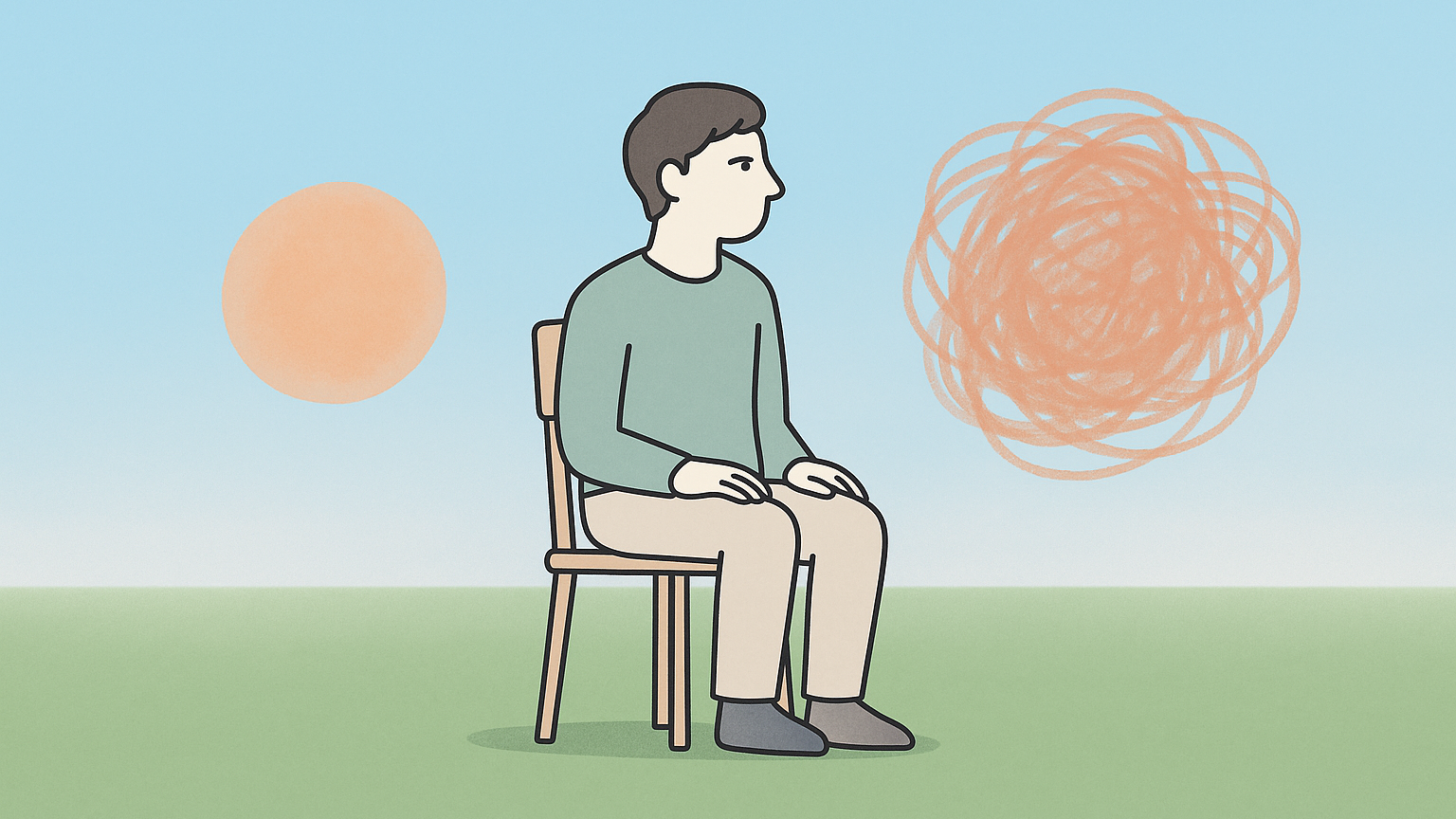
    But emotional pain doesn’t follow the same rules. Often, the more we try to suppress it, overthink it, or push it away… the more it tightens its grip.

    There’s a quiet wisdom in mindfulness — and in Buddhist teachings — that invites a different approach. One that feels almost backwards at first:

    We can’t always stop the pain — but we can change our relationship to it.

    It’s a bit like trying to untangle a knot by yanking at it — the more force you use, the tighter everything pulls. The way through isn’t more effort — it’s softening. Slowing down. Giving it space to loosen on its own.

    This shift can feel uncomfortable. Even a little wrong. But it opens up a kind of space — one where we’re not fighting ourselves so hard.

    And in that space, something surprising can happen:
    The pain is still there — but the suffering begins to ease.

    Pain vs. Suffering: What’s the Difference?

    It can be helpful — and strangely relieving — to separate pain from suffering.

    Pain is the raw stuff of life. The heartbreak after loss. The anxiety before a big change. The grief, the anger, the disappointment. Pain is what shows up when we’re human and things are hard.

    Suffering, on the other hand, is what we layer on top. It’s the commentary, the judgment, the urgency to fix or escape. It’s the inner voice that says:

    “I shouldn’t feel this.”
    “This means I’m weak.”
    “I can’t cope — I need to make this stop.”

    So the original pain — say, a wave of anxiety — gets buried under a pile-on of fear, shame, and self-criticism.

    In mindfulness and ACT (Acceptance and Commitment Therapy), they sometimes talk about this as clean vs. dirty discomfort.

    • Clean pain is the original feeling.
    • Dirty pain is everything we pile on top.

    A common example…

    “I feel anxious.” that’s pain.
    “This means I’m failing / I should pull myself together / What’s wrong with me?” that’s suffering.

    The suffering isn’t our fault — it’s a very normal response, especially in a culture that teaches us to avoid discomfort. But the more we layer it on, the harder everything feels.

    There’s a well-known teaching from Buddhism that puts it simply:

    “Pain is inevitable. Suffering is optional.”

    That might sound a bit too neat at first — especially if you’re in the middle of something painful. But what it points to is this: even if we can’t eliminate the pain, we may not need to add more suffering on top.

    And that alone can change everything.

    How Resistance Amplifies Pain

    Most of us don’t mean to make things harder for ourselves. But when discomfort shows up, we often react in ways that — without realising — turn pain into suffering.

    We try to get rid of the feeling. Out-think it. Distract from it. Judge ourselves for having it in the first place. And slowly, quietly, the original pain becomes harder to bear.

    Here are some common flavors of suffering you may recognise:

    Overanalysing the feeling

    Sam feels anxious before a meeting. A normal enough response — a bit of tension, some butterflies. But instead of noticing the nerves and letting them pass, they start analysing:

    “Why am I like this?”
    “This shouldn’t be happening again.”
    “I should be over this by now.”
    “What if I mess up?”

    Now it’s not just anxiety. It’s shame, pressure, and self-blame — all stacked on top. The original discomfort gets buried under a landslide of mental noise.

    Or how about this one…

    Tensing or bracing

    Sometimes resistance isn’t mental — it’s physical. We hold our breath. We clench our jaw. We brace against the feeling, like we’re waiting for a wave to crash.

    But the tension doesn’t protect us. It often makes the experience more intense — and more exhausting. The body becomes a battleground.

    Or this one…

    Judging ourselves for struggling

    Ravi notices he’s low and flat for the third day in a row. Instead of offering himself patience, the thoughts rush in:

    “Snap out of it.”
    “Stop wallowing.”
    “You’re being ridiculous.”

    Now he’s not just feeling low — he’s also feeling inadequate and ashamed. The pain doubles, even though the original emotion hasn’t changed.

    Or even this one…

    Avoiding or numbing

    Riya feels overwhelmed. Her chest is tight and she can’t settle. Instead of pausing, she reaches for her phone and scrolls for hours. She doesn’t even notice the time passing — but when she looks up, nothing’s better.

    In fact, now the anxiety is still there… and it’s joined by guilt, disconnection, and a pounding headache.

    These examples all represent the second arrows, a concept from Buddhist teaching:

    • The first arrow is the pain we can’t avoid.
    • The second arrow is how we respond — often with resistance, fear, or self-judgment.

    We don’t always realise we’re adding a second arrow. But once we notice, we have a choice. We may not be able to stop the first — but we can start unlearning the second.

    What Mindfulness Offers Instead

    If resisting pain creates more suffering… what’s the alternative?

    Mindfulness offers a quieter, more spacious way through. It doesn’t promise instant relief or emotional perfection. But it does offer a different relationship to what we’re feeling — one that’s less reactive, less tangled, and more compassionate.

    Instead of scrambling to fix the feeling, mindfulness invites us to meet it.

    That means:

    • Awareness – gently noticing what’s present in your body, mind, or heart
    • Allowing – letting it be there, just for now, without trying to push it away
    • Compassion – offering yourself the same kindness you’d show a struggling friend

    This can feel strange at first. Like doing the emotional opposite of everything we’ve been taught.

    It might feel like “giving in” to the feeling… or like you’re just sitting in the discomfort for no reason. And honestly? It is uncomfortable at first. Sitting with pain without rushing to change it can feel counterintuitive — even a bit vulnerable.

    But over time, it starts to loosen the grip.

    It’s like stepping out of an internal tug-of-war. The pain might still be there, but you’re no longer pulling against it. And that shift — from fighting the feeling to holding it more gently — can reduce suffering in quiet but powerful ways.

    A good way to sum this up might be:
    It’s less about feeling better right away… and more about struggling less over time.

    A Small Practice, A Quiet Shift

    Sometimes the smallest shift — just a few seconds of staying with yourself instead of pushing away the feeling — can be enough.

    When discomfort shows up, try this

    “Right now, I feel a tightness in my chest.”
    “I notice the thought, ‘I can’t handle this.’”
    “I’m just going to breathe with this for a moment — not fix it, not fight it.”

    That’s it.

    You’re not trying to make the feeling go away. You’re just making space for it — long enough to stop running.

    If that feels hard (and often it does), you could try placing a hand on your heart, or taking one slow, deliberate breath, and saying to yourself:

    “This is hard… and I’m staying with it just for a few seconds.”

    That might be enough for today.

    You don’t need to love your pain.
    You don’t have to make it mean something.
    But softening around it — instead of bracing against it — can offer a quiet kind of relief.

    Consider this:
    Peace isn’t the absence of pain — but the absence of war with it.

    So next time something uncomfortable arises, maybe you don’t need to fix it right away.
    Maybe you could just pause.
    Notice the second arrow before it lands.

    And ask gently:
    “What if I didn’t have to fight this — just for now?”

  • Overthinking Everything? You’re Not Alone

    Overthinking Everything? You’re Not Alone

    Rumination, decision paralysis, and living in your head.

    Your brain just won’t switch off

    You’ve replayed that conversation a dozen times.
    You’ve run through every possible outcome.
    You’ve made a list… then a second list… then abandoned both.

    It can feel like your mind is constantly on — scanning for risks, predicting reactions, trying to find the “right” path forward.

    And all that thinking? It can be exhausting.

    Overthinking usually has a purpose

    At its core, overthinking is protective.
    It often begins as a way to stay safe — to avoid getting it wrong, upsetting someone, or being caught off guard.

    You might have learned early on that being prepared meant being okay.
    That being “easy” or “right” was how you kept the peace.
    That the best way to avoid pain was to anticipate it.

    So your mind learned to get ahead of everything — just in case.

    But instead of creating certainty, it often creates stuckness

    You might get caught in:

    • Looping thoughts or replaying old situations
    • Paralysis around decisions – even small ones
    • Second-guessing your feelings or instincts
    • A constant sense of pressure to get it right

    The harder you try to think your way through, the more tangled it can feel.
    And when every decision feels high-stakes, it’s easy to get stuck in analysis paralysis — where the fear of choosing “wrong” keeps you from choosing at all.

    Overthinking and the anxiety cycle

    When something feels uncertain or uncomfortable, it’s natural to reach for reassurance — from yourself, from others, or from endless Googling or mental checking.

    And while that reassurance might help for a moment, it rarely sticks.
    Instead, it can become part of an anxiety cycle:

    Worry → Seek relief → Temporary calm → Doubt returns → More worry…

    In therapy, we look at this cycle gently — not to criticise or “fix” it, but to understand how it works, and what might help soften its grip.

    Not every thought deserves a microphone

    One of the trickiest parts of overthinking is that thoughts often feel factual — even when they’re not.

    You might find yourself caught in:

    • All-or-nothing thinking (“If I can’t do it perfectly, I’ve failed.”)
    • Catastrophising (“If I say the wrong thing, they’ll never speak to me again.”)
    • Mind-reading (“They probably think I’m annoying.”)
    • Shoulds and self-criticism (“I should have handled that better.”)

    These are what CBT often calls cognitive distortions — habitual ways of thinking that can sound convincing, but don’t always reflect the full picture.

    In therapy, we begin to notice these patterns — not to dismiss or invalidate your thoughts, but to hold them with more curiosity and kindness.

    You don’t have to fight your mind — but you can relate to it differently

    Rather than trying to silence every thought, therapy can offer tools for responding in new ways.

    This might include:

    • Mindfulness practices that help you come back to the present
    • Gentle body-based tools to settle the nervous system
    • Learning to observe your thoughts without becoming entangled in them
    • Using self-compassion instead of self-blame when spirals happen
    • Exploring what it means to move forward without full certainty

    You don’t have to control every outcome.
    You don’t have to think your way into peace.

    Sometimes, the shift comes from learning to feel safer in uncertainty — and from trusting that you’ll be able to handle what comes.

    In therapy, we can untangle this together

    Overthinking can feel like a tangled ball of yarn — one you’ve been trying to unravel on your own for a long time.

    Therapy doesn’t promise instant clarity.
    But it does offer:

    • A place to hear yourself think out loud
    • A calm presence to help you slow down
    • Support in making sense of what matters to you
    • Gentle encouragement to move from stuckness into choice

    You don’t need to figure everything out before you begin.
    Just showing up is the first step.

  • When You Avoid Conflict at All Costs

    When You Avoid Conflict at All Costs

    Fawning, fear of confrontation, and losing your voice

    It often feels easier to stay quiet

    Maybe you apologise too quickly.
    Maybe you agree to things that don’t sit right.
    Maybe you replay conversations in your head, wondering if you upset someone — even if they said nothing.

    When conflict arises (or even just tension), your instinct might be to smooth it over, take the blame, or shrink yourself just to keep the peace.

    What’s going on underneath

    Avoiding conflict isn’t a flaw — it’s often a learned response rooted in safety.
    You might have grown up in an environment where anger felt dangerous, where expressing needs led to rejection, or where you had to stay agreeable to stay safe.

    In therapy, this pattern is sometimes called fawning — the tendency to appease, people-please, or abandon your own needs to avoid perceived threat. It’s one of the ways our nervous system tries to protect us.

    In those moments, your system may be reacting as if connection is at risk — or as if expressing your needs might lead to disapproval, rejection, or rupture.
    Even mild tension can feel unsafe when past experiences have wired you to anticipate potential danger in relationships.

    You lose touch with what you want

    When keeping others happy becomes the priority, your own needs often get buried.

    You might:

    • Struggle to voice preferences or boundaries
    • Say “yes” when you mean “maybe” or even “no”
    • Find it hard to tolerate someone else being disappointed or upset
    • Feel anxious or guilty after standing your ground

    Over time, it can lead to resentment, exhaustion, or a quiet sense of disconnection from your own voice.

    Conflict doesn’t have to mean danger

    Part of the work in therapy can be gently untangling the belief that conflict always means rupture.
    Not all disagreement is harmful. Not all tension leads to abandonment.

    Often this goes back to early attachment dynamics — how safe or unsafe it felt to be emotionally expressive, assert needs, or disagree in your family or close relationships. In sessions, we can begin to notice these patterns and reflect on where they might come from. That kind of exploration can help bring more choice into the present, so you’re not just reacting from old conditioning.

    You don’t need to start picking fights — but it’s possible to begin practising small acts of honesty. Things like:

    • Naming your preferences, even if they’re different
    • Letting a silence hang instead of rushing to fix it
    • Sitting with discomfort, rather than rescuing others from it

    These are acts of courage — especially if they go against everything you’ve learned.

    Self-compassion matters here, too

    If you’re starting to notice this pattern in yourself, go gently.
    There’s probably a good reason your system learned to avoid conflict. This pattern was never about weakness — it was about survival.

    Your nervous system has likely been doing its best to keep you safe, based on what it’s learned over time. One of the gifts of therapy is building awareness of those survival strategies — and learning how to soothe the nervous system when it perceives threat that isn’t actually there.

    With time, we can explore what safety means for you — in your body, in your relationships, and in the therapy space itself.

    In therapy, we can hold both:

    • Appreciation for the ways you’ve kept yourself safe
    • Curiosity about how you might move differently now

    That shift doesn’t happen overnight. But little by little, it’s possible to find your voice again — and trust that it’s allowed to take up space.

  • Wanting Closeness, But Pushing People Away

    Wanting Closeness, But Pushing People Away

    Attachment wobbles, fear of vulnerability, and ambivalence.

    Mixed signals — even to yourself

    You want to feel close to people.
    You long to be known, seen, cared for.

    But when someone gets too close, you might suddenly feel uneasy — exposed, wary, like you want to retreat.
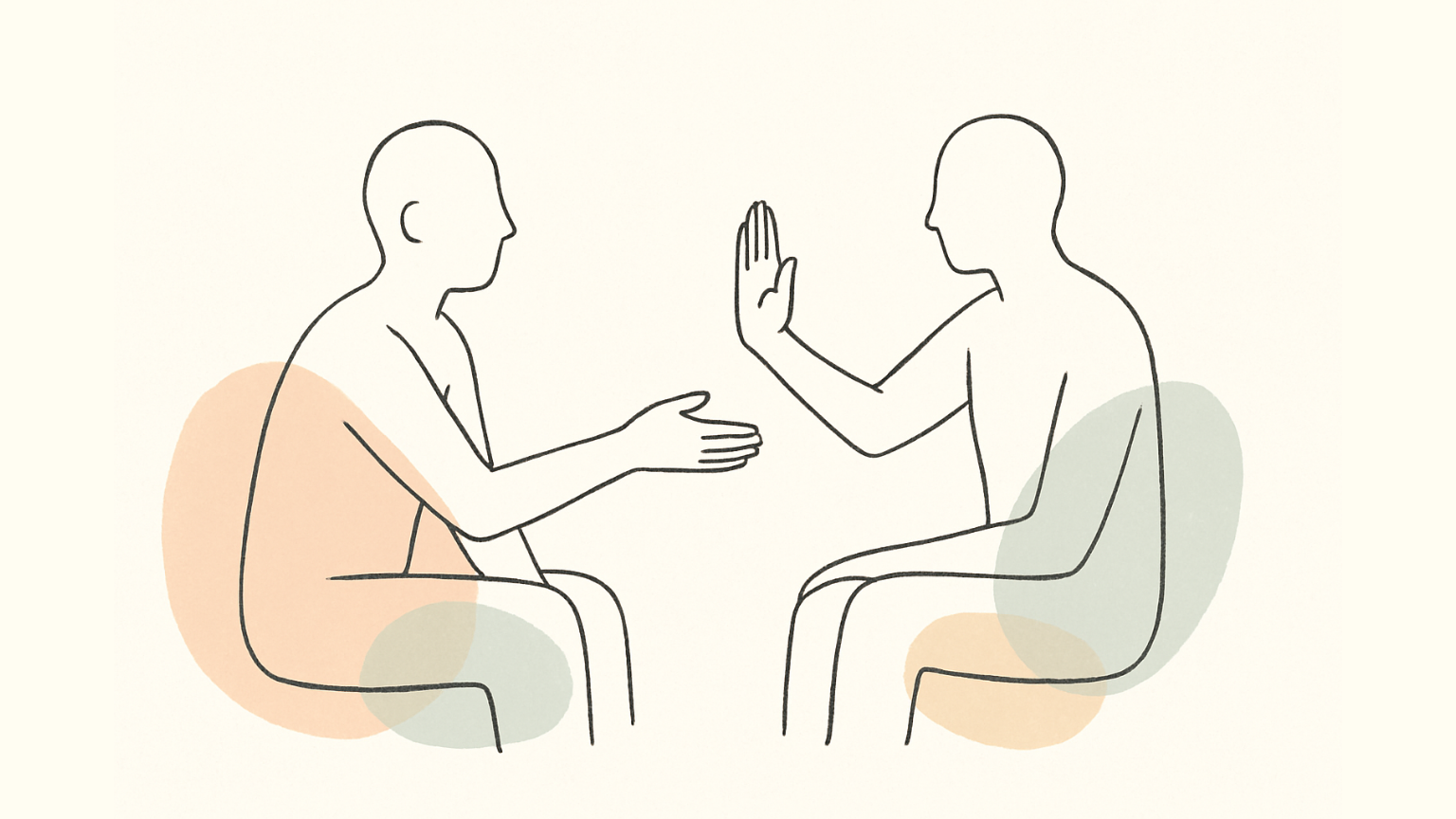
    It can feel like a tug-of-war inside: part of you wants connection, part of you doesn’t trust it.

    There’s often a good reason for the push-pull

    This ambivalence isn’t irrational.
    It often comes from early experiences where closeness was inconsistent — or even unsafe.

    Maybe the people you relied on were emotionally unpredictable.
    Maybe you had to earn love by being “good” or self-sufficient.
    Maybe vulnerability didn’t lead to care — it led to criticism, rejection, or neglect.

    So your nervous system learned to stay alert. To not get too comfortable.
    You might crave intimacy — and also brace against it.

    Patterns that can show up

    You might:

    • Crave intimacy, but feel smothered when someone leans in
    • Test people to see if they’ll stick around
    • Worry that you’re too much… or not enough
    • Keep your guard up even in safe relationships

    Sometimes, you might even sabotage the closeness you want — without meaning to.
    That could look like picking fights, pulling away just as things start to feel good, or talking yourself out of trusting someone who’s shown they care.

    It can feel frustrating: “Why do I do this?”
    But usually, it’s not about rejection for the sake of it — it’s about protection.

    Self-sabotage is often a sign that your system is trying to keep you safe from pain you’ve known before.
    And while those patterns once helped you survive, they might now be getting in the way of the connection you long for.

    Therapy can help you get curious — not critical

    You don’t need to force closeness before you’re ready.
    And you don’t need to get rid of your defences overnight.

    In therapy, we can explore what these patterns are trying to protect — and what it might feel like to move slowly, safely, towards connection.

    Not by pushing yourself.
    But by listening inward.
    And offering yourself the same care you’re hoping to find in others.

  • Feeling Responsible for Everyone’s Emotions

    Feeling Responsible for Everyone’s Emotions

    Emotional over-functioning, blurred boundaries, and guilt

    You feel everything — and then some

    You sense the shift in someone’s tone.
    You notice when something’s “off,” even if no one else does.
    You might try to pre-empt upset, smooth things over, or hold back your own feelings so others don’t feel worse.

    It’s like you have an emotional radar that’s always switched on — tuned to everyone else’s weather.

    If someone around you feels hurt, disappointed, or angry, your reflex might be to fix it — even if it’s not your fault or responsibility.

    Over time, this can feel less like compassion — and more like pressure.

    Where does it come from?

    This kind of emotional over-functioning often starts early.

    Maybe you grew up in a home where you had to stay attuned to other people’s moods to stay safe or connected.
    Maybe you were praised for being “mature for your age,” or for not causing trouble.
    Maybe no one ever really asked how you felt — but you learned to be there for everyone else.

    In some families, it’s not safe to express certain emotions — so kids become caretakers, peacekeepers, or emotional sponges.

    And when you’ve learned that love means tuning into others, it can feel unnatural — even wrong — to centre your own feelings.

    When empathy becomes a burden

    Caring deeply isn’t the problem — but carrying what isn’t yours to carry can leave you drained, anxious, or quietly resentful.

    You might:

    • Struggle to set emotional boundaries
    • Take on guilt for things outside your control
    • Feel over-responsible for others’ moods
    • Absorb distress even when it’s unspoken

    Therapists sometimes refer to this as blurred boundaries or enmeshment — where the lines between self and other get fuzzy.

    It’s not about blame — it’s about awareness.
    Because even empathy needs edges.

    Guilt often gets in the way

    One of the hardest parts of setting emotional boundaries is the guilt.

    You might think:

    • “I’m being selfish.”
    • “They’ll think I don’t care.”
    • “If I don’t help, who will?”

    But guilt doesn’t always mean you’re doing something wrong.
    Sometimes it just means you’re doing something new.

    Therapy can help tease apart healthy care from over-responsibility — and help you notice when guilt is signaling real misalignment, vs. when it’s just a growing pain of change.

    Therapy can help you come back to yourself

    This isn’t about becoming “less caring.” It’s about including yourself in the circle of care.

    In therapy, we might explore:

    • How these patterns developed — and how they show up now
    • Where your boundaries feel clear vs. where they feel porous
    • What it’s like to consider your own emotions without guilt

    We can also explore and practise boundary scripts — simple, respectful phrases that help you express your limits without shutting others out.

    Things like:

    • “I really want to support you, but I need a moment to gather myself first.”
    • “I care about how you’re feeling — and I also need to take care of my own energy right now.”
    • “Can we talk about this a bit later when I’m less depleted?”

    Having language ready can make it easier to honour both your care for others and your care for yourself.

    Because your job isn’t to keep everyone happy at the expense of yourself.

    You’re allowed to care deeply — and still have space to breathe.

  • Why Do I Always Put Myself Last?

    Why Do I Always Put Myself Last?

    People-pleasing, over-functioning, and chronic self-neglect.

    It can feel like second nature

    Maybe you’re the reliable one. The helper. The person everyone comes to, knowing you’ll say yes.

    You might shrug things off with “it’s fine” or “it’s not a big deal,” even when it is. You might tell yourself other people’s needs matter more — or that putting yourself first would somehow be selfish, indulgent, or even dangerous.

    Over time, it can become a pattern. You meet everyone else’s needs — and quietly abandon your own.

    Where does this come from?

    Putting yourself last isn’t a flaw. Often, it starts as a way to stay safe or connected.

    Maybe you learned early on that being “good” or low-maintenance got you praise — or at least kept you out of trouble. Maybe you grew up in a home where other people’s emotions took up all the space. Maybe you were a caretaker before you were ever cared for.

    And sometimes, people-pleasing or over-functioning becomes a way to feel needed, valued, or in control — especially when life feels unpredictable or unsafe.

    But at what cost?

    You might look like you’re coping — but feel tired, resentful, or invisible underneath.

    When you constantly prioritise others, your own needs don’t just disappear. They get pushed down, silenced, or stored away… and they still want to be heard.

    This can lead to:

    • Burnout or chronic exhaustion
    • Difficulty making decisions for yourself
    • Trouble receiving support or kindness
    • A quiet sense of anger, grief, or numbness

    Change doesn’t mean swinging the other way

    If this pattern feels familiar, you might worry that doing anything differently will make you selfish, or uncaring.

    But balance doesn’t mean becoming self-centred — it means learning to include yourself in the care you give so freely to others.

    That often starts with boundaries — not as a wall, but as a way of protecting your energy, time, and emotional capacity. It’s a way of honouring your limits, without guilt.

    It also means practising self-compassion — meeting yourself with the same kindness and understanding you offer to everyone else. That might sound simple, but for many people, it’s deeply unfamiliar… and deeply healing.

    Small steps might look like:

    • Pausing before you say yes
    • Noticing how you really feel about something
    • Practising small moments of refusal, rest, or receiving
    • Letting “no” be an act of care – not conflict

    These aren’t selfish. They’re signs of self-connection.

    In therapy, we can explore where this started — and what could be different

    You don’t need to unpick it all at once.
    In fact, the work often begins by simply noticing the pattern — naming it, exploring where it might come from, and getting curious about how it shows up now.

    From there, small shifts can begin to unfold:

    • Allowing yourself to take up a little more space
    • Feeling your feelings without guilt or minimising
    • Trusting that your needs matter too

    You don’t need to go it alone — and you don’t have to wait for burnout to begin caring for yourself.

  • When Independence Becomes Isolation

    When Independence Becomes Isolation

    The self-protective distance that starts to feel lonely.

    You’re used to doing things on your own

    Maybe you’ve always been the strong one. The one who copes, who gets on with it, who doesn’t ask for help.

    There’s pride in your independence — and maybe safety, too. Letting people in hasn’t always gone well. So you learned to be self-reliant, maybe even invisible.

    It works… until it doesn’t.

    Sometimes, independence is armour

    Being fiercely independent can be a strength — but it can also be a way of protecting yourself from disappointment, vulnerability, or the risk of being misunderstood.

    Maybe:

    • You downplay your needs, or don’t share them at all
    • You avoid leaning on others, even when things feel heavy
    • You stay on the surface in relationships, keeping safe distance
    • You’re more comfortable giving support than receiving it
    • You’ve learned to numb or dismiss your emotional needs to keep things running smoothly

    That protective instinct may have come from somewhere real — but over time, it can start to feel isolating.

    We all need connection — even if it feels risky

    Longing for closeness doesn’t make you weak.
    Needing support doesn’t make you needy.
    You can be independent and still want to be seen, understood, and cared for.

    The need for connection is human.
    And sometimes, what we call “independence” is just a habit built on disappointment — one that helped us survive, but now keeps us stuck.

    In therapy, you don’t have to carry it all alone

    You don’t need to show up with a polished version of yourself.
    You don’t need to explain away your need for support.
    You can be honest here — even if your voice shakes a little at first.

    Therapy can be a space where connection feels safe again — slowly, and on your terms.

    Together, we can explore:

    • What shaped your need for independence
    • How it protects you — and how it limits you
    • What trust, support, and closeness could look like in a way that feels safe and manageable

    You’re allowed to take up space. You’re allowed to want more.
    You don’t have to rush into anything. There’s no pressure to be “more open” before you’re ready. But if you’re feeling the quiet weight of aloneness, it might be time to try a different kind of support — one where you still get to be you.